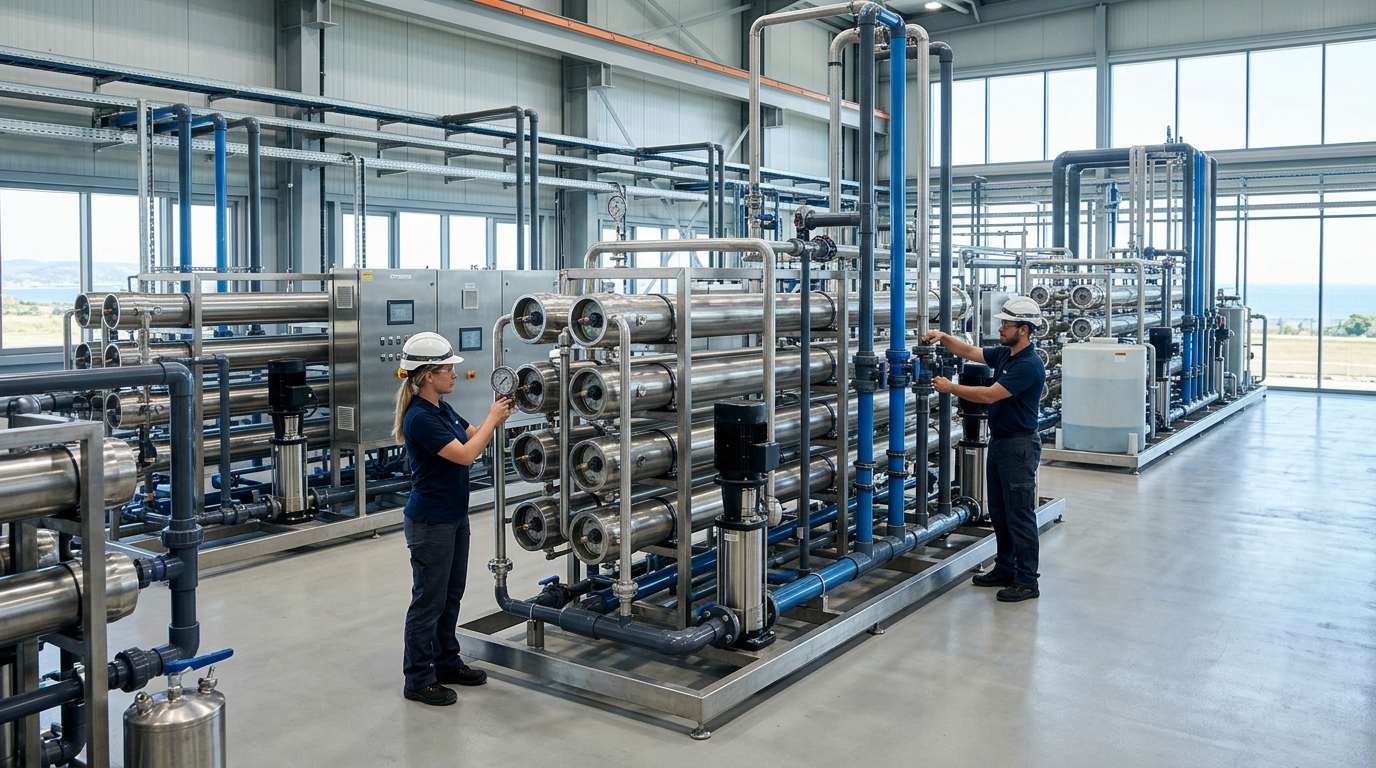
The cost of an RO plant in Agra typically ranges from ₹50,000 for smaller commercial units to over ₹5,00,000 for larger industrial systems, with installation and ongoing maintenance adding to the overall investment. This range varies significantly based on capacity, technology, and specific site requirements. If you're considering an RO plant for your home or business, understanding these factors is key to making an informed decision. For reliable systems, consider an experienced RO Plant Manufacturer in Agra that can provide tailored solutions for your needs.
Understanding the Initial Investment and Factors Influencing RO Plant Costs
Key Factors Shaping Your RO Plant's Price Tag
The price of an RO plant is not a one-size-fits-all figure; several critical elements contribute to the final investment. The most significant factor is the plant's capacity, measured in Liters Per Hour (LPH) or Liters Per Day (LPD). A small commercial unit designed for a restaurant or office might be 50-250 LPH, while a large industrial plant for a manufacturing facility could be thousands of LPH. Naturally, higher capacity means more powerful pumps, larger membranes, and more robust construction, leading to a higher price point.
Another crucial aspect is the raw water quality. If the input water has high levels of Total Dissolved Solids (TDS), hardness, or other contaminants, the RO plant will require more sophisticated pre-treatment stages. These might include sand filters, carbon filters, softeners, or anti-scalant dosing systems, all of which add to the initial setup cost. The chosen technology, such as the type and brand of RO membranes, pumps, and control systems, also plays a role, with advanced features or premium brands generally increasing the price.
Consider also the plant's automation level. Basic RO systems may require manual operation and monitoring, while fully automatic plants offer features like auto-flush, auto-start/stop, and digital displays, providing convenience but at a higher cost. The material of construction for the plant's frame and piping (e.g., MS, SS304, SS316) impacts durability and cost, especially for industrial applications where corrosion resistance is vital. Finally, the reputation and after-sales service commitment of the manufacturer can influence pricing; established providers often charge more but offer better support.
How Different RO Plant Types and Capacities Impact Pricing
RO plants come in various configurations, each designed for specific needs and varying significantly in cost. Broadly, they can be categorized by their intended application and capacity. Small commercial RO plants, suitable for offices, cafes, or small-scale industries, typically range from 50 LPH to 500 LPH. These units are often compact, semi-automatic, and cost between ₹50,000 and ₹2,50,000. Their design focuses on ease of use and space efficiency.
Medium-scale industrial RO plants (500 LPH to 2000 LPH) cater to larger businesses like hotels, hospitals, or small manufacturing units. These systems are more robust, may feature higher automation, and often include more advanced pre-treatment. Prices for this category can range from ₹3,00,000 to ₹7,00,000, reflecting the increased capacity and component quality. They are built for continuous operation and higher demand.
Large-scale industrial RO plants (2000 LPH and above) are designed for heavy industries, municipal applications, or large-scale bottled water production. These are highly customized systems, often fully automated, with extensive pre-treatment, multiple membrane stages, and sophisticated control systems. Their cost can start from ₹8,00,000 and go upwards of ₹50,00,000 or even several crores, depending on the required output and complexity of water treatment for the input water quality unique to locations like Agra.
The RO Plant Installation Process: Timelines and Service Details in Agra
Expected Installation Durations for RO Plants in Agra
The installation timeline for an RO plant varies considerably, depending primarily on the system's size and complexity. For a small to medium-sized commercial RO plant (e.g., 100-500 LPH) in Agra, the installation typically takes anywhere from 1 to 3 days. This duration usually includes setting up the main unit, connecting inlet and outlet pipes, installing pre-treatment filters, wiring the electrical components, and initial testing.
Larger industrial RO plants, which might involve custom piping, larger storage tanks, and more extensive pre-treatment facilities, can require a more significant commitment. Such installations could span from 5 days to several weeks. This extended period accounts for site preparation, civil work if needed, the assembly of multiple components, and thorough commissioning to ensure the system operates optimally under local conditions.
Before the physical installation begins, there's often a planning and design phase. This involves a site visit to assess water quality, available space, and specific requirements. Once the design is finalized and components are procured, the installation team schedules the work. Factors like access to the site, availability of necessary utilities (water, electricity), and the swiftness of client approvals can also influence the overall project timeline. Professional installers strive to minimize disruption while ensuring a high-quality setup.
What a Standard RO Plant Installation Service Typically Includes
A standard RO plant installation service typically encompasses several key steps to ensure your system is set up correctly and functions efficiently. Initially, it includes the delivery of the RO plant components to your site. This covers the main RO unit, pre-filtration modules, pumps, and any specified storage tanks.
The physical setup involves carefully positioning the RO plant, securing it, and making all necessary plumbing connections. This means connecting the raw water inlet to the pre-filters, then to the RO membrane housing, and finally routing the purified water outlet to a storage tank or directly to your distribution system. The concentrate (rejected water) line will also be installed to a suitable drain.
Electrical connections are a critical part of the service, ensuring the pumps and control panel are safely and correctly wired to your power supply. After all connections are made, the installation team will perform commissioning and testing. This involves flushing the system, checking for leaks, verifying proper pressure and flow rates, and conducting initial water quality tests to confirm the plant is producing water to the desired specifications. Finally, basic operational training for your staff on starting, stopping, and monitoring the system is usually provided, along with documentation like user manuals and warranty information.
Sustaining Your Investment: Maintenance, Support, and Choosing a Reliable Provider
Managing Ongoing RO Plant Maintenance Expenses
Beyond the initial purchase and installation, an RO plant requires regular maintenance to ensure its longevity and efficient operation. The most significant recurring cost is the replacement of filters and membranes. Pre-filters (sediment, carbon) typically need changing every 3-6 months, costing a few hundred to a couple of thousand rupees per set, depending on size and quality. RO membranes, the core of the purification process, usually last 1-3 years but can cost significantly more, ranging from ₹5,000 to ₹50,000 or more per membrane, depending on their capacity and type.
Chemicals, such as anti-scalants and cleaning agents, are also part of the maintenance budget, especially for systems treating high-TDS water. These prevent scaling and fouling of membranes, extending their life. The cost for these can be a few hundred to several thousand rupees monthly or quarterly, based on usage. Electricity consumption is another operational expense, which varies with the plant's size and how many hours it runs daily.
Scheduling periodic service visits from a technician is crucial. These visits, often recommended every 3-6 months, involve checking pressure, pump performance, water quality parameters, and cleaning components. Annual maintenance contracts (AMCs) are a popular option in Agra, offering comprehensive coverage for parts and labor at a fixed yearly fee, which can range from 10-20% of the plant's initial cost. An AMC helps budget for maintenance and ensures proactive care, preventing costly breakdowns.
How to Choose a Reputable RO Plant Provider and Get a Fair Quote
Selecting the right RO plant provider is as crucial as choosing the plant itself. Start by looking for companies with a strong local presence and a proven track record in Agra. Check their experience in your specific application, whether it's for commercial, industrial, or specialized uses. Reputable providers often have a portfolio of completed projects and customer testimonials that you can review.
When seeking quotes, don't settle for just one. Obtain at least three detailed proposals from different vendors. Each quote should clearly outline the system specifications (capacity, membrane type, pre-treatment stages), installation costs, warranty terms, and a breakdown of maintenance expenses, including filter replacement schedules and AMC options. Be wary of unusually low prices, as they might indicate substandard components or hidden costs later on.
Ask about their after-sales support and response time for service requests. A reliable provider offers prompt customer care and readily available spare parts. Inquire about training for your staff on basic operation and troubleshooting. A good company will conduct a thorough site survey and provide a customized solution rather than offering a generic package. Prioritize transparency in pricing and a commitment to quality and service over just the lowest upfront cost.
Related Posts
- The Essential Guide to RO Plant Services and Water Purification in Mumbai
- 5 Common Water Treatment Issues in Hyderabad Homes
- Understanding Sewage Treatment Plant Cost: What You Need to Know
- How to Choose the Right RO Plant Manufacturers in Patna
- The Importance of Regular RO Plant Service: Solving Your Water Woes