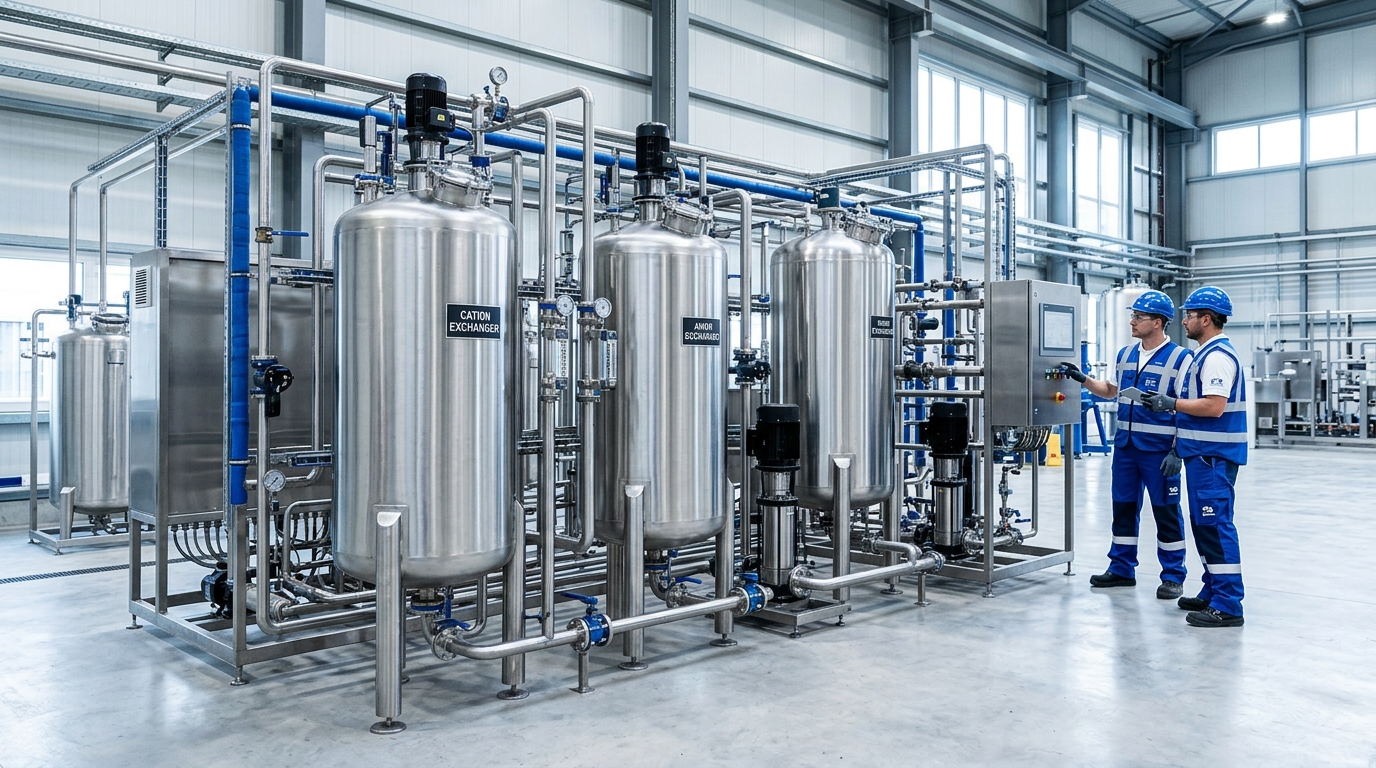
As Bangalore continues its remarkable expansion, becoming a hub for diverse industries, the demand for high-purity water is more critical than ever. Whether for manufacturing, laboratories, or power generation, ensuring water meets specific quality standards is non-negotiable. This is where a reliable dm plant becomes indispensable, playing a pivotal role in operational efficiency and product quality. But choosing the right system and provider requires careful consideration to avoid future complications and unexpected expenses.
Strategizing Your DM Plant Investment: Requirements and Cost Considerations
A Demineralization (DM) plant is a crucial system designed to remove mineral ions from water through ion-exchange processes, producing dm water or demineralized water. This highly purified water is indispensable for sensitive industrial applications where even trace mineral impurities can lead to significant problems like scaling, corrosion, or interference with critical chemical processes. Therefore, the very first step in avoiding costly errors is a thorough assessment of your specific needs. Selecting the correct dm water plant requires a detailed analysis of your raw feed water quality – often necessitating a comprehensive water analysis report – alongside your desired output purity levels and required flow rate. A meticulously designed dm water treatment plant is the foundation for a consistent supply of quality water and robust equipment protection.
Beyond the technical requirements, a clear understanding of the dm water plant cost is paramount for any industrial investment. This financial consideration extends far beyond the initial purchase price, encompassing the full lifecycle expenses including installation, ongoing operational costs, and regular maintenance. Numerous factors influence the dm water plant price, such as the plant's capacity, the level of automation, the quality of ion-exchange resins used, and any specific pre-treatment requirements dictated by the feed water. For instance, a medium-sized industrial application in Bangalore could see prices ranging from ₹2 lakhs for more compact units to upwards of ₹20 lakhs for large-scale, fully automated systems. Always insist on a detailed financial breakdown from potential suppliers to proactively identify and avoid any hidden charges or unforeseen expenses that could inflate the actual cost down the line.
Partnering for Success: Vetting DM Plant Manufacturers and Ensuring Expert Installation
The selection of your dm plant manufacturer is arguably the most critical decision, as it dictates the long-term success and reliability of your high-purity water supply. Reliable dm plant manufacturers deliver far more than just hardware; they bring invaluable expertise, particularly those with a strong presence and understanding of the specific industrial landscape in Bangalore. When evaluating potential partners, prioritize companies with a verifiable track record, transparent business practices, and a demonstrated commitment to customer support. A truly reputable dm plant manufacturer will proactively conduct a thorough site assessment, leveraging their experience to recommend a tailored solution perfectly aligned with your unique operational requirements and budget. They should provide clear, detailed specifications and be transparent about their manufacturing processes and quality control. Resist the temptation to make price the sole determinant; instead, weigh factors like the quality of components, customization capabilities, and the robustness of their post-installation service and warranty.
Furthermore, a professional installation by experienced dm plant manufacturers is non-negotiable for optimal system performance. This process is multi-faceted, beginning with meticulous design finalization, followed by thorough site preparation, precise assembly of all system components, and expert execution of piping and electrical connections. The timeline for installation can vary significantly, from a few days for simpler units to several weeks for more complex, large-scale systems. A truly comprehensive service package should extend beyond mere assembly to include critical commissioning, where the plant is fine-tuned to meet specified output parameters. Crucially, this must be complemented by comprehensive operator training, empowering your team to manage and troubleshoot the system effectively. Finally, always verify that genuine replacement parts and stringent engineering standards are adhered to throughout the installation, as this directly impacts the longevity, efficiency, and safety of your dm water plant.
Safeguarding Your Investment: Avoiding Pitfalls and Sustaining Performance
While the initial selection and installation are crucial, the true test of your dm water plant investment lies in its sustained, efficient operation over time. It’s imperative to identify potential red flags during the procurement phase to avoid future headaches. Be extremely wary of dm water plant price quotes that appear suspiciously low without accompanying, thorough justifications. Such offers often signal compromises in the quality of internal components, the grade of ion-exchange resins, or an absence of essential after-sales support and warranty provisions – all of which will inevitably lead to higher operational costs and premature system failures. A lack of clear, readily available information regarding after-sales service, spare parts availability, or comprehensive warranty terms should be a significant deterrent.
Even the most advanced dm water plant is a sophisticated piece of equipment that demands consistent attention. To perform optimally and ensure longevity, periodic, proactive maintenance is absolutely essential. This includes regular servicing routines, timely replacement of ion-exchange resins as they become exhausted, and continuous monitoring of crucial water quality parameters. Neglecting these fundamental aspects can have severe consequences, leading to a significant decrease in operational efficiency, a surge in energy consumption, and accelerated wear and tear on components. Ultimately, deferred maintenance and an initially cheaper, substandard unit will incur far greater long-term operational costs and risks of unexpected downtime, proving to be a much more expensive error than investing wisely upfront.