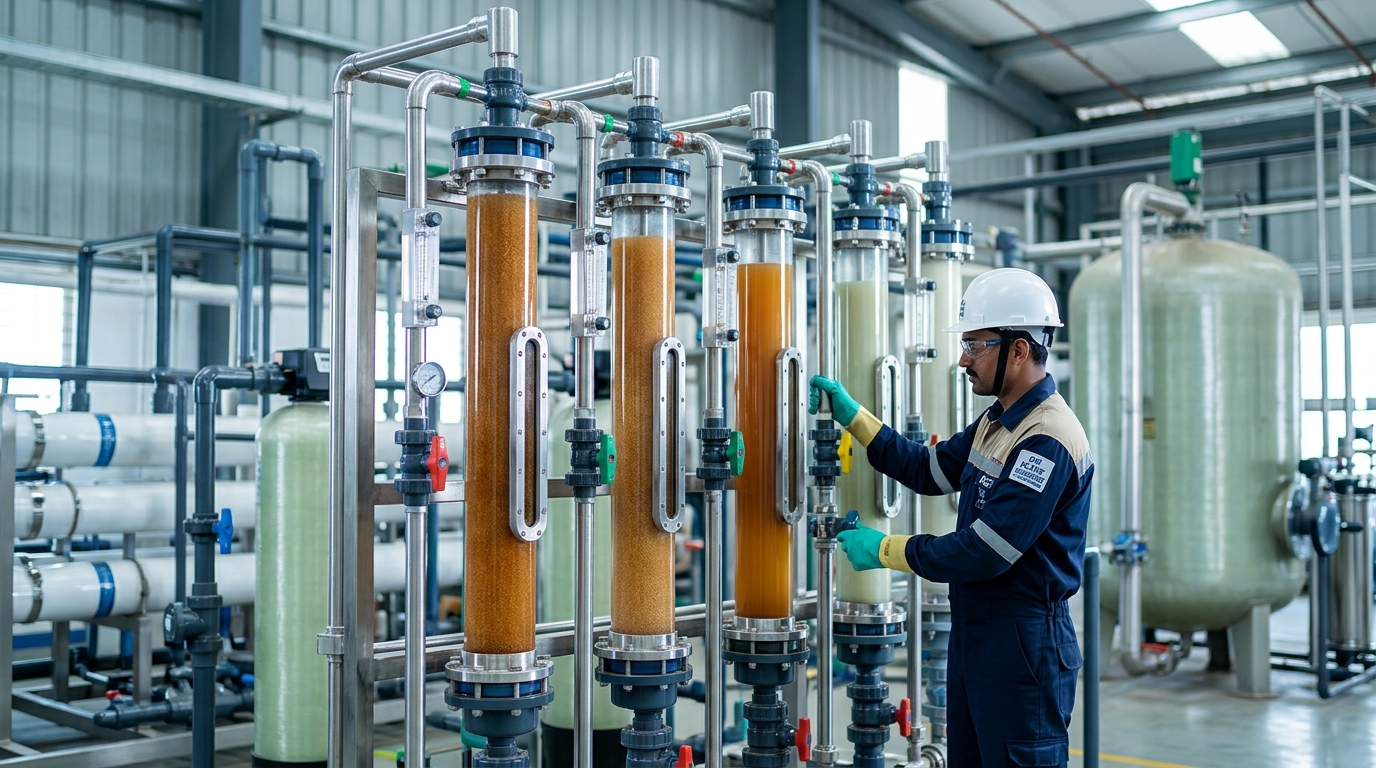
Resin regeneration in Vijayawada is crucial for maintaining the efficiency of your demineralization (DM) plant. Properly managing this process not only extends the life of your resin but also ensures that your water treatment systems function optimally. Here’s a checklist of essential tips and benefits to help you navigate resin regeneration effectively. Same-day slots for industrial water treatment are usually available.
Understanding Resin Types and Their Importance
Different resins serve various purposes. Before initiating regeneration, ensure you know whether your resin is cationic or anionic. Cationic resins are primarily used for softening and deionization processes, while anionic resins are essential for removing negatively charged contaminants. This understanding helps in selecting the appropriate regeneration chemicals and procedures. Typically, prices for high-quality resins can range from INR 50 to INR 150 per liter depending on the type and vendor.
Identifying and Timing the Regeneration Process
Watch for indicators that your resin needs regeneration. Common signs include a drop in water quality, increased conductivity, or longer processing times. Regular monitoring can save costs by preventing more significant issues down the road. You should also consider the optimal intervals for regeneration, which can vary based on usage but generally occur every few weeks or months. Scheduling regular regeneration involves tracking usage patterns, which can take about an hour to conduct per batch depending on the system size.
Preparing for Regeneration
-
Follow Manufacturer Guidelines Always refer to the manufacturer’s guidelines for your specific resin and DM plant. These guidelines often include essential details on regeneration intervals, chemical requirements, and safety measures. Adhering to these instructions will enhance your resin's performance in the long run.
-
Choose Quality Regeneration Chemicals Select high-quality regeneration chemicals such as sodium chloride for cationic resins or sodium hydroxide for anionic resins to ensure effective resin restoration. Look for suppliers in Vijayawada who provide reliable and tested chemicals for optimal performance. Poor quality can lead to resin damage and ineffective regeneration. Expect to pay between INR 500 and INR 2000 for a gallon of regeneration chemicals, depending on the type and concentration needed.
-
Keep a Record of Regeneration Cycles Maintaining a log of regeneration cycles aids in tracking efficiency. By recording the dates, types of resin used, and performance metrics, you can develop a better understanding of your system's needs and improve your operational planning.
-
Ensure Proper Cleaning Procedures Before starting the regeneration, perform a thorough cleaning of the resin bed. This step ensures that contaminants do not interfere with the regeneration process. Use appropriate cleaning agents and follow safety protocols, which can add up to the overall time commitment of the process, extending it to around 3-4 hours for thorough cleaning.
Post-Regeneration Steps and Long-term Management
-
Evaluate Water Quality Post-Regeneration After completing the regeneration process, testing the water quality is critical. Use standard methods to measure pH, conductivity, and contaminant levels to verify the effectiveness of the regeneration process. This post-regeneration evaluation, which may require about 30 minutes, is essential for confirming that your system is operating efficiently.
-
Seek Professional Assistance While DIY methods may work, don’t hesitate to seek professional help for complex cases. Local service providers in Vijayawada can offer deep insights and services tailored to your specific DM plant requirements, ensuring optimal operation. You can find local experts on industrial water treatment websites.
-
Monitor System Performance Continuously Maintain ongoing monitoring of your overall system performance. This will help catch any irregularities early, allowing for timely interventions before they escalate into more significant issues. Regular checks enhance operational efficiency and longevity. Employing simple monitoring devices might cost between INR 2,000 and INR 10,000, depending on features.
-
Educate Your Team Training your staff on resin regeneration and maintenance is essential. Equip them with the knowledge to identify issues, perform routine checks, and follow proper procedures. An informed team contributes significantly to smooth operations, which can translate into better productivity and savings.
-
Assess Cost-Effectiveness Evaluate the costs involved in resin regeneration against the potential savings from extended resin life and improved operational efficiency. Knowing the economics can influence your decision-making and budget planning. The average cost of operations and maintenance can range from INR 20,000 to INR 50,000 annually, depending on the scale of operations.
-
Dispose of Waste Properly Post-regeneration, ensure that you have a proper waste disposal method in place. Follow local regulations in Vijayawada to dispose of any chemicals or materials used, safeguarding both the environment and your community. This step might require engaging local waste management services, which can be an additional cost of around INR 5,000 to INR 10,000 annually.
-
Stay Updated with Technology Resin regeneration technology is ever-evolving. Keep up with the latest advancements to optimize your processes. Upgrading your systems and equipment can further enhance efficiency and cost-effectiveness. Investing in newer technologies can cost anywhere from INR 1 lakh to several lakhs but can result in significant operational savings in the long run.
Conclusion
Resin regeneration is a vital aspect of the efficiency of your DM plant in Vijayawada. By following these tips, you can ensure better performance, reduced costs, and a longer lifespan for your resin. Foster a culture of maintenance, monitoring, and continual learning within your team to fully capitalize on the benefits of your investment.
Remember, effective resin regeneration contributes significantly to water quality and operational efficiency, making it essential for every facility's success.