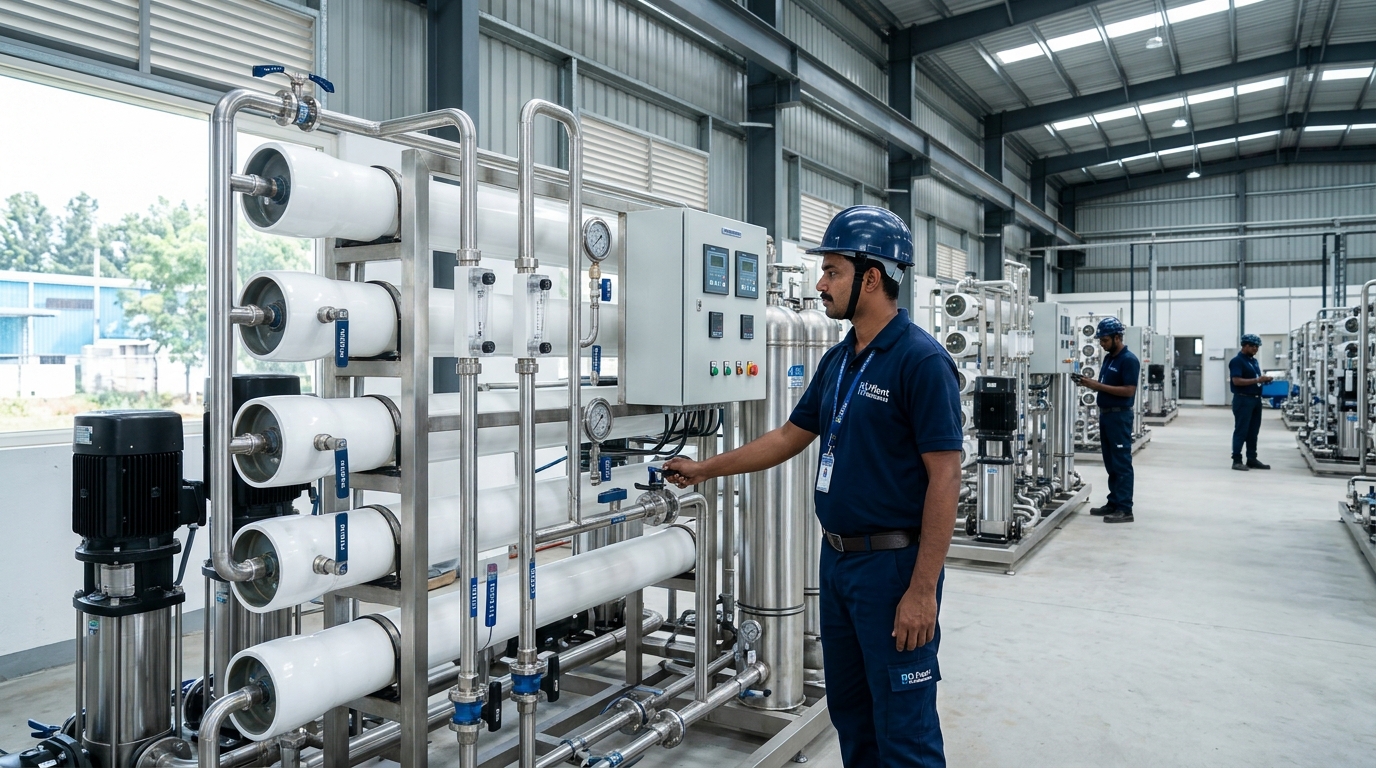
Many businesses in Bangalore make a crucial mistake by underestimating the vital role of pure water in their operations, often leading them to choose an Industrial RO Plant Manufacturer in Bangalore based solely on the lowest price rather than overall value and expertise. This oversight can result in frequent breakdowns, subpar water quality, and increased long-term operational costs. Investing in a high-quality industrial RO plant is not just about purification; it's about ensuring consistency, protecting equipment, and complying with industry standards. For reliable solutions tailored to your specific needs, consider Industrial RO Plant Manufacturer in Bangalore as a key step towards operational excellence.
Understanding the Critical Role of Industrial RO Systems in Bangalore's Businesses
What exactly is an Industrial RO Plant, and why is it crucial for businesses in Bangalore?
An Industrial Reverse Osmosis (RO) plant is a sophisticated water purification system designed to remove dissolved salts, contaminants, and suspended solids from water, producing highly purified water suitable for various industrial applications. Unlike smaller domestic units, these systems are built for high volume, continuous operation, and specific water quality targets. The process involves pushing water under high pressure through a semi-permeable membrane, which blocks impurities while allowing pure water molecules to pass through.
For businesses in Bangalore, where water sources can vary in quality, an industrial RO plant is indispensable. Industries such as pharmaceuticals, food and beverage, textiles, power generation, and electronics manufacturing rely on ultra-pure water to prevent product contamination, protect sensitive machinery from scaling and corrosion, and meet stringent regulatory requirements. Without precise water quality, product consistency suffers, equipment lifespan shortens, and operational efficiency diminishes, making it a critical asset for sustained business success.
A Strategic Approach to Choosing and Acquiring Your Industrial RO Plant
How do I select the best RO Plant Manufacturer in Bangalore for my specific needs?
Selecting the right RO Plant Manufacturer in Bangalore involves more than just comparing specifications; it requires a thorough evaluation of their capabilities, experience, and commitment to client success. Start by assessing their track record in your specific industry. A manufacturer with a deep understanding of pharmaceutical water standards, for example, will offer different solutions than one specializing in process water for textiles.
Key criteria include the manufacturer's ability to customize systems. Generic solutions rarely meet unique industrial demands. Look for a manufacturer who conducts a detailed site assessment and water analysis before proposing a solution, ensuring the RO plant is precisely engineered for your influent water quality and effluent requirements. Check their certifications, such as ISO standards, which indicate a commitment to quality management. Before booking, ask for references from similar projects, visit their existing installations if possible, and scrutinize their after-sales service capabilities. A reputable manufacturer will prioritize transparency, offering clear proposals that detail system components, estimated performance, and warranty terms.
What factors determine the cost of an RO plant, and what's a typical budget range?
The cost of an RO plant varies significantly based on several critical factors, making a one-size-fits-all price estimate challenging. The primary determinants include the plant's capacity (how much water it can process per hour or day), the complexity of the raw water quality (requiring more extensive pre-treatment stages), the type and number of membranes used, and the level of automation integrated into the system. High-quality membranes, advanced controls, and robust construction materials will naturally command a higher price but offer superior longevity and efficiency.
For a small-scale industrial RO plant (e.g., 500-1000 liters per hour), businesses in Bangalore might expect to invest anywhere from ₹2.5 Lakhs to ₹5 Lakhs. Medium-scale systems (2000-5000 LPH) could range from ₹7 Lakhs to ₹15 Lakhs, while large-scale or highly customized plants (10,000 LPH and above) can easily exceed ₹20 Lakhs, reaching into crores depending on scale and specialization. These figures typically include the RO unit, pre-treatment filters (sand, carbon), dosing systems, basic instrumentation, and standard installation. What’s often not included initially are complex civil works, advanced post-treatment, or specialized pumps, which should be clarified in the quotation. A warning sign to look out for is an unusually low price without clear justifications; this might indicate compromised quality or hidden costs down the line.
How long does the installation process for an Industrial RO plant usually take, and what should I expect?
The installation timeline for an Industrial RO plant is not fixed and depends heavily on the system's size, complexity, and site-specific conditions. Generally, the process can be divided into several phases. The initial phase involves site preparation, which might include civil work for foundations, piping layouts, and electrical connections. This can take anywhere from a few days to several weeks.
Once the site is ready and the components are delivered, the physical installation and assembly of the RO plant, including connecting the pre-treatment units, the RO skid, pumps, and control panel, typically takes about one to three weeks for a medium-sized system. After assembly, the commissioning phase begins. This involves flushing the system, calibrating instruments, checking for leaks, and conducting performance tests to ensure the purified water meets the specified quality standards. This critical phase can last from a few days to a week. Overall, from delivery to full operational status, a typical industrial RO plant installation in Bangalore might range from 3 weeks to 2 months, though larger or custom projects could take longer. Clear communication with your manufacturer about the timeline and your facility's readiness is essential for a smooth process.
Ensuring Long-Term Performance and Maximizing Your RO Investment
What kind of maintenance does an Industrial RO Plant require, and how often?
Proper maintenance is crucial for the efficient and long-term operation of an Industrial RO plant. Neglecting it can lead to decreased water quality, higher operating costs, and premature equipment failure. Routine daily checks should include monitoring pressure gauges, flow rates, and conductivity meters to detect any immediate deviations. Weekly or bi-weekly tasks often involve checking chemical dosing levels and inspecting pre-filter cartridges for clogging.
Scheduled maintenance is more intensive. Sediment filters and carbon filters typically require replacement every 3-6 months, depending on influent water quality and usage. RO membrane cleaning is a critical aspect, often performed every 3-12 months using specialized chemical solutions to remove scaling and fouling. Membrane replacement, while less frequent, is necessary every 3-5 years, or sooner if performance significantly degrades. Warning signs that your RO plant needs attention include a noticeable drop in purified water production, an increase in purified water conductivity (indicating less effective salt rejection), higher differential pressures across the membranes or filters, and increased energy consumption. Many businesses opt for an Annual Maintenance Contract (AMC) with their Industrial RO Plant Manufacturer in Bangalore to ensure professional, timely service and prevent costly downtime.
What support and guarantees should I look for from RO Plant Manufacturers in Bangalore?
When investing in an industrial RO plant, the support and guarantees offered by the manufacturer are as important as the technology itself. A reliable RO Plant Manufacturers in Bangalore will provide comprehensive warranties covering both components and the overall system performance. Typically, you should expect a warranty of at least one year on parts and workmanship, with clear terms regarding what is covered and what voids the warranty. Performance guarantees should specify the output water quality (e.g., TDS reduction percentage) and flow rate under standard operating conditions.
Beyond the initial warranty, inquire about their after-sales service and technical support. This includes availability of spare parts, response time for service calls, and the provision of emergency breakdown assistance. Reputable manufacturers often offer annual maintenance contracts (AMCs) that encompass preventive maintenance, regular inspections, and priority service. Operator training is also vital; ensure the manufacturer provides thorough training to your staff on system operation, basic troubleshooting, and routine maintenance procedures. This empowers your team and minimizes reliance on external support for minor issues.
Are there common mistakes businesses make when investing in an Industrial RO Plant, and how can they be avoided?
Businesses frequently stumble in several areas when procuring an Industrial RO plant. One common mistake is failing to conduct a comprehensive raw water analysis. Without knowing the exact contaminants and their concentrations, the plant might be undersized or over-engineered, leading to inefficient operation or premature membrane fouling. Always insist on a detailed water analysis report and ensure the proposed system is designed specifically to address those findings.
Another error is ignoring future expansion plans or changing water requirements. An RO plant sized only for current needs might become inadequate quickly, forcing expensive upgrades or replacement. Discuss your projected growth with the manufacturer. Thirdly, some businesses prioritize the lowest upfront cost over long-term operational efficiency and quality. Cheaper components or a less efficient design can result in higher energy consumption, increased chemical usage, and frequent maintenance, negating initial savings. Finally, overlooking the manufacturer's reputation and after-sales support can leave you stranded when issues arise. Always check references, review their service network, and understand their commitment to post-installation support to ensure your investment delivers consistent, pure water for years to come.